

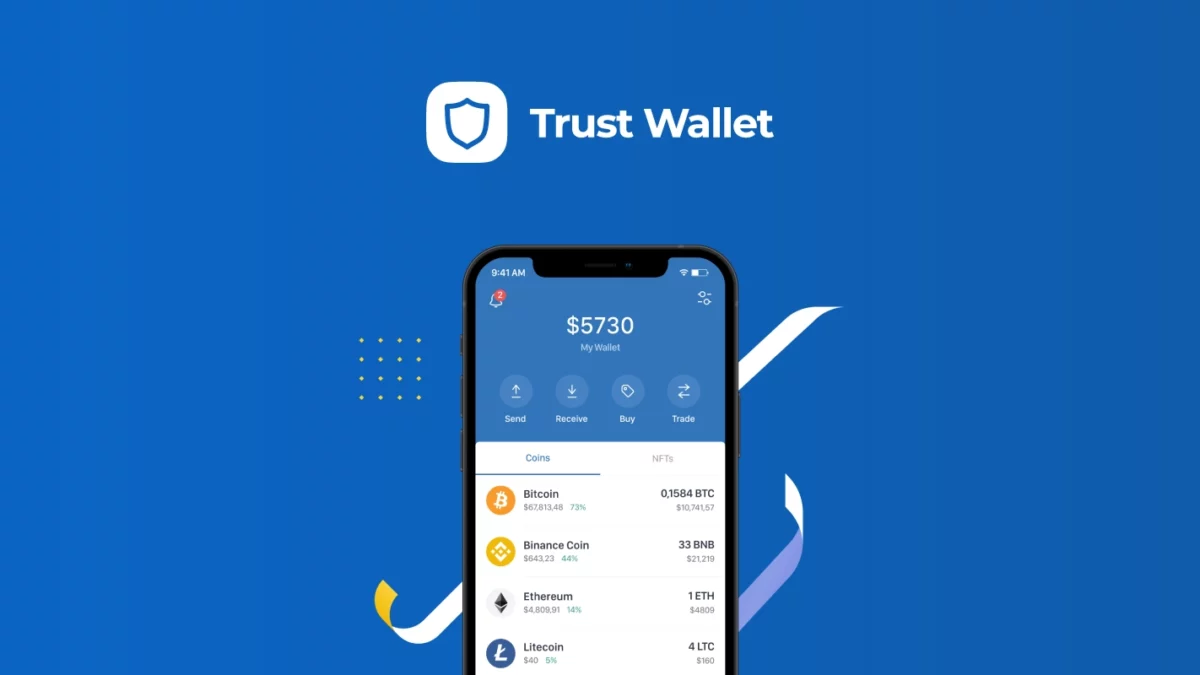
Mobile crypto wallets have become essential as users increasingly manage assets on smartphones. Trust Wallet has grown into one of the most popular non-custodial wallets globally. But how secure and practical is it today?
What is Trust Wallet?
Trust Wallet is a decentralized mobile wallet that allows users to store cryptocurrencies while maintaining control of their private keys. Unlike exchange wallets, Trust Wallet does not hold custody of user funds.
The wallet supports thousands of assets across multiple blockchains, including major cryptocurrencies such as Bitcoin and Ethereum. Its built-in decentralized application (dApp) browser also allows users to interact directly with DeFi platforms.
Ease of Use
One of Trust Wallet’s biggest advantages is its simplicity. The app is clean, intuitive, and beginner-friendly. Creating a wallet takes only a few minutes, and sending or receiving funds is straightforward.
The wallet also supports staking for certain cryptocurrencies, allowing users to earn passive rewards directly within the app.
Security Considerations
As a non-custodial wallet, Trust Wallet gives full responsibility to the user. The recovery phrase must be stored safely and offline. If it is lost, funds cannot be recovered.
Because it operates on mobile devices, security also depends on phone safety. Users should enable device-level security such as biometric locks and avoid installing suspicious apps.
For larger holdings, combining Trust Wallet with a hardware wallet can provide additional security.
Strengths and Limitations
Trust Wallet is excellent for everyday crypto usage, DeFi interaction, and mobile accessibility. However, it does not offer the same level of cold-storage protection as hardware wallets.
Final Verdict
Trust Wallet is a solid choice for users who want control over their crypto assets in a convenient mobile format. It balances accessibility and decentralization well, making it suitable for both beginners and intermediate users.
